How to Use the Calculator
- Enter your sex, age, weight, and height. Switch between US units (pounds, feet, inches) and metric (kilograms, centimeters) at the top.
- Choose your activity level. Pick the one that matches a typical week, not your best week. If you're between two, choose the lower one.
- Choose to lose or gain weight, then pick a pace. The results list your calories at each pace, from Gentle (0.5 lb a week) to Ambitious (2 lb a week), plus Maintain. Tap one to see it in full. The paces use the names of the weight goal paces in FITIV Pulse.
The result shows the calories to eat each day at that pace, along with your maintenance calories (TDEE) and your BMR. If a pace would take you below the safe minimum, the calculator doesn't give a number for it.
How TDEE Is Calculated
The calculator works in two steps: it estimates your BMR, then multiplies it by an activity factor.
BMR is the energy your body uses at rest to breathe, circulate blood, and run your organs. The calculator uses the Mifflin-St Jeor equation, developed from measurements of 498 healthy adults aged 19 to 78 (Mifflin et al., 1990):
- Men: 10 × weight in kg + 6.25 × height in cm − 5 × age + 5
- Women: 10 × weight in kg + 6.25 × height in cm − 5 × age − 161
TDEE is your BMR times an activity multiplier. These multipliers are the ones most TDEE calculators use. They're broad estimates, so treat the activity level as your best guess:
| Activity level | Multiplier | A typical week |
|---|---|---|
| Sedentary | 1.2 | Desk job and little or no exercise |
| Lightly active | 1.375 | Light exercise or sports 1–3 days a week |
| Moderately active | 1.55 | Moderate exercise or sports 3–5 days a week |
| Very active | 1.725 | Hard exercise or sports 6–7 days a week |
| Extra active | 1.9 | Very hard daily training, or a physical job plus exercise |
How Many Calories to Eat to Lose Weight
To lose weight, eat less than your TDEE. The calculator uses the usual rule of thumb that a pound of body fat holds about 3,500 calories, so a 500-calorie daily deficit works out to about 1 pound a week. In metric, it uses about 7,700 calories per kilogram, so 0.5 kg a week is a 550-calorie daily deficit.
| Pace in FITIV Pulse | Per week | Daily deficit |
|---|---|---|
| Gentle | 0.5 lb | 250 calories |
| Recommended | 1 lb | 500 calories |
| Steady | 1.5 lb | 750 calories |
| Ambitious | 2 lb | 1,000 calories |
People who lose weight gradually, at about 1 to 2 pounds a week, are more likely to keep it off than people who lose it faster (CDC). That's the Recommended through Ambitious paces, and the calculator stops at Ambitious. Gentle is slower than the CDC's range but the easiest pace to keep up.
Harvard Health advises not eating fewer than 1,200 calories a day for women or 1,500 for men, except under a health professional's supervision (Harvard Health). If a pace would take your target below that, the calculator doesn't show a number for it. Choose a slower pace or add activity instead.
Treat the 3,500-calorie rule as a rough guide. As you lose weight, your body burns a little less, so the same deficit produces slower results over time. Researchers who compared the rule with carefully controlled diet studies found it consistently overestimated weight loss (Thomas et al., 2013). For more on how BMR, TDEE, and a deficit fit together, see Calories Explained.
To gain weight, the calculator adds a surplus instead, with the same calories per pound or kilogram.
Example: TDEE for a 35-Year-Old Woman
Take a 35-year-old woman who is 5 ft 5 in (165 cm), weighs 160 lb (72.6 kg), and exercises 3–5 days a week:
- BMR: 10 × 72.6 + 6.25 × 165.1 − 5 × 35 − 161 = about 1,422 calories
- TDEE: 1,422 × 1.55 (moderately active) = about 2,204 calories
- To lose 1 lb a week (Recommended): 2,204 − 500 = about 1,704 calories a day
At the Ambitious pace (2 lb a week), her target drops to about 1,204 calories, right at the 1,200-calorie minimum for women, so the Recommended or Steady pace leaves more room.
To split a target like 1,704 calories into grams of protein, carbs, and fat, use the macro calculator.
Why Your Real TDEE May Differ
Any formula estimates an average. The same review that favored Mifflin-St Jeor also found noteworthy errors when it's applied to individuals (Frankenfield et al., 2005), and the activity multiplier is a rough guess on top of that. Two people with the same numbers can still burn quite different amounts, largely from how much they move outside workouts.
Use the result to get started, then check it against your weight:
- Eat at your target for 2–3 weeks and log your food honestly.
- Watch your weight trend, not single weigh-ins. Daily weight swings with water, salt, and food.
- Adjust in small steps, such as 100–200 calories, if the trend is moving faster or slower than your pace.
If your weight hasn't moved after a few weeks at your target, your real TDEE is probably lower than the estimate, or you're eating more than you've logged.
How FITIV Helps You Hit Your Target
A calculator estimates your burn from a formula. An Apple Watch estimates it from your day: it records your resting and active calories in Apple Health. In FITIV Pulse, the Energy card on the Today tab compares the calories you burn (active plus resting, from Apple Health) with the calories you log in a food app that saves to Apple Health, and shows the difference as a deficit or surplus.
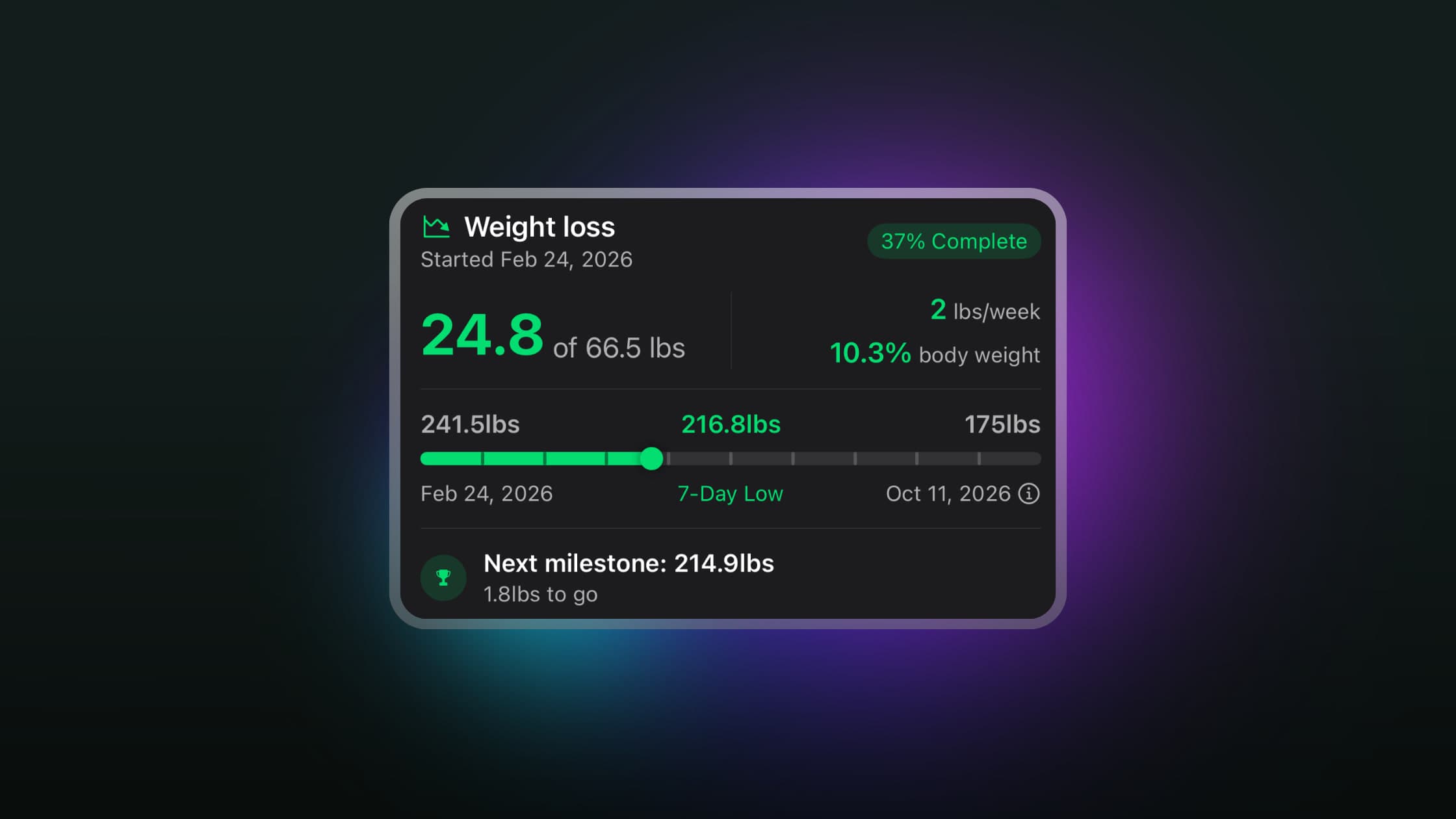
To track whether the deficit is working, Weight Management lets you set a goal weight and choose a weekly pace, using the same pace names as this calculator, then charts your weight as a 7-day moving average. Workouts you record count toward the active calories Apple Health reports, and Strain shows how hard the day was from your heart rate.
Frequently Asked Questions
How accurate is a TDEE calculator?
Close enough to start with. The Mifflin-St Jeor equation comes within 10% of measured resting metabolism for more people than any other common formula, but it can be further off for individuals, and the activity level is a guess. Check the estimate against your weight trend after two or three weeks and adjust.
How many calories should I eat to lose 1 pound a week?
About 500 calories a day less than your maintenance calories (TDEE), based on the rule of thumb that a pound of fat holds about 3,500 calories. The rule tends to overestimate loss over time, because your body burns a little less as you get lighter, so expect progress to slow and adjust as you go.
Should I use my Apple Watch calories or a calculator?
Both are estimates. A calculator uses a formula and your chosen activity level, while an Apple Watch estimates your resting and active calories from its sensors across your actual day. A practical approach: use a calculator to pick a starting target, then compare it with your watch's numbers and your weight trend over a few weeks.
What's the lowest calorie target I should use?
Harvard Health advises not going below 1,200 calories a day for women or 1,500 for men without a health professional's supervision. If your target falls below that, choose a slower pace or add activity. If you have a medical condition or take medication that affects appetite or weight, talk to your doctor before starting a deficit.